Lesson 05: The Sata Revolution: Sata Interface & Cable

Lesson 11/49 | Study Time: 30 Min
Lesson 05: The Sata Revolution: Sata Interface & Cable

Learning Outcomes


i. Comprehend the emergence of SATA (Serial Advanced Technology Attachment) as a revolutionary interface for connecting storage devices to computers


ii. Identify the key features and advantages of SATA technology over its predecessor, Parallel ATA (PATA)


iii. Understand the structure and functions of the SATA data cable, the physical medium through which data is transferred


iv. Recognize the widespread applications of SATA technology in modern computer systems and external storage devices


Introduction


In the realm of computer hardware, a pivotal shift occurred in the early 2000s with the introduction of the Serial Advanced Technology Attachment (SATA) interface. This revolutionary technology marked a significant advancement in the way storage devices, such as hard disk drives (HDDs) and solid-state drives (SSDs), connect to computers, offering substantial performance and reliability enhancements over its predecessor, Parallel ATA (PATA). This lesson delves into the world of SATA technology, exploring its key features, advantages, and widespread applications in modern computing.


i. SATA: A Paradigm Shift in Storage Connectivity


Prior to SATA, Parallel ATA (PATA) was the dominant interface for connecting storage devices. However, PATA's parallel data transfer method faced limitations in terms of speed and scalability. SATA, on the other hand, introduced a serial data transfer approach, enabling significant improvements in performance and reliability.


ii. Key Features and Advantages of SATA Technology


SATA offers several compelling advantages over PATA:


Higher Data Transfer Rates: SATA supports data transfer rates of up to 6 gigabits per second (Gbps), significantly faster than PATA's maximum of 133 Mbps.


Hot-Swapping Capability: SATA allows for hot-swapping of storage devices, enabling the removal or addition of drives without powering down the computer.


Cable Length: SATA cables can be up to 1 meter in length, providing greater flexibility in system configurations.


Reduced EMI Interference: SATA's serial interface is less susceptible to electromagnetic interference (EMI), improving signal integrity.


iii. The SATA Data Cable: The Physical Link


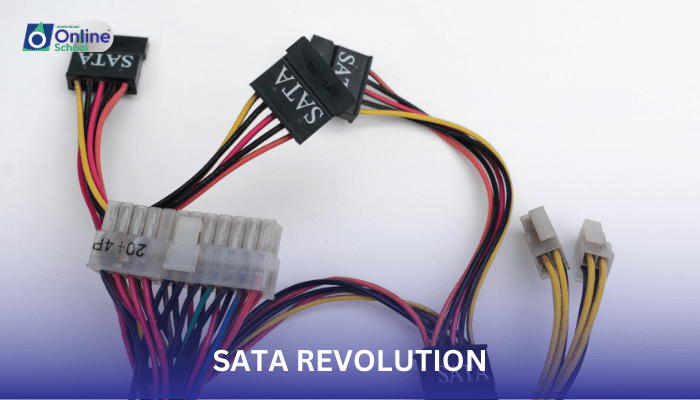
The SATA data cable serves as the physical medium through which data is transferred between the motherboard and storage devices. It consists of seven conductors: three grounds, three data lines, and one sideband signal line. The cable's compact design and locking mechanism ensure secure connectivity.


iv. Applications of SATA Technology


SATA has become the ubiquitous interface for connecting storage devices in modern computer systems and external storage solutions. Its widespread adoption is driven by its performance, reliability, and versatility:


Internal Storage: SATA is the standard interface for internal HDDs and SSDs in desktops, laptops, and servers.


External Storage: SATA eSATA ports on computers allow for the connection of external SATA devices, such as external hard drives and enclosures.


Portable Storage: SATA is commonly used in portable storage devices, such as 2.5-inch external hard drives, offering high-speed data transfer and compatibility.


SATA technology has revolutionized the way storage devices connect to computers, providing a reliable, high-performance interface that caters to the demanding needs of modern computing. By understanding the key features, advantages, and applications of SATA, students gain a deeper appreciation for the technological advancements that shape the digital landscape.


Saboor Ali

Saboor Ali

Product Designer

Class Sessions

1- Lesson 01: Introduction to Computers 2- Lesson 02: Understanding Operating Systems 3- Lesson 03: Navigating the Operating System 4- Lesson 04: Essential Operating System Functions 5- Lesson 05: Working with Files and Folders 6- Lesson 06: Installing an Operating System 7- Lesson 01: The Brain of the Computer: The Central Processing Unit (CPU) 8- Lesson 02: Memory: The Storage for Information 9- Lesson 03: The Gates to Interaction: Input/Output Devices 10- Lesson 04: Connecting the Components: AGP, PCI, and IDE 11- Lesson 05: The Sata Revolution: Sata Interface & Cable 12- Lesson 06: Memory Expansion: Memory Slots and Their Usage 13- Lesson 07: Ports for Communication: Serial, Parallel, PS/2, USB, and HDMI Ports 14- Lesson 08: Enhancing Performance: Sound Cards, Video Graphics Cards, Modem Cards, and Network Cards 15- Lesson 09: Storage Revolution: SSD Cards and SSD HDDs 16- Lesson 01: The Essential Software: Defining Operating Systems 17- Lesson 02: Windows and Linux: Exploring Operating System Types 18- Lesson 03: Demystifying Icons: Understanding Basic Operating System Icons 19- Lesson 04: Windows Installation: A Step-by-Step Guide 20- Lesson 05: Mastering Boot Options: Booting from Storage Media 21- Lesson 06: Partitioning and Formatting: Preparing the Hard Drive 22- Lesson 07: Selecting the Right Drive: Choosing the Appropriate Drive for Installation 23- Lesson 08: Device Drivers: Installing Essential Software for Hardware Components 24- Lesson 09: File Management Essentials: Copying, Moving, Renaming, and Searching 25- Lesson 10: Personalizing Your Workspace: Customizing Desktop and Display Settings 26- Lesson 11: Deciphering File Extensions: Understanding File Types 27- Lesson 12: Unveiling Hidden Files: Managing Hidden and System Files 28- Lesson 13: Device Manager: Managing Hardware Devices 29- Lesson 14: Task Manager: Monitoring System Performance 30- Lesson 15: Commanding the System: Utilizing the Command Prompt 31- Lesson 16: Understanding OS Updates and Upgrades: Distinguishing between Routine Updates and Major Upgrades 32- Lesson 17: Keeping the OS Current: The Process of Updating the Operating System 33- Lesson 18: Monitoring Storage Capacity: Checking Free Space on the Hard Drive 34- Lesson 19: Online OS Updates: Checking for Available Updates Online 35- Lesson 20: Booting Options: Booting from Storage Media or Internet 36- Lesson 01: Navigating Applications with Ease: Mastering Menus, Toolbars, and Dialog Boxes 37- Lesson 02: Undo: Restoring Mistakes with a Simple Click 38- Lesson 03: MS Office: A Suite of Essential Productivity Tools 39- Lesson 04: MS Word: The Wordsmith's Toolkit 40- Lesson 05: PowerPoint: Captivating Presentations Made Simple 41- Lesson 06: Excel: Mastering Data with Spreadsheets 42- Lesson 07: Mastering Font Styles and Sizes in MS Word 43- Lesson 08: Formatting Paragraphs for Enhanced Readability 44- Lesson 09: Enhancing Text with Inserting and Editing Tools 45- Lesson 10: Minimizing and Maximizing the Ribbon for a Streamlined Experience 46- Lesson 12: Adjusting Margins for a Tailored Document Layout 47- Lesson 13: Hyperlinking: Connecting Information across Documents and Websites 48- Lesson 14: Embellishing Documents with Watermarks 49- Lesson 15: Managing Documents: Effectively Organizing and Saving Files